
I love that the notion of the “developer experience” is having its day. Of course, thanks to Matz, we Rubyists have embraced “developer happiness” since day one! And with Rails, we also get great, out-of-the-box support for pretty much any common command line task we need to run regularly, generally via the rake and rails command line utilities.
As apps grow and mature, though, these tasks can and will deviate from the defaults. If you work on multiple apps, you may find yourself forgetting which ones use RSpec versus Minitest, foreman start versus rails server versus bin/dev, and so on. And if you’re like me, you’ve also got systems written in entirely different languages and frameworks, with varying degrees of attention to the developer experience. It’s no fun having to root around documentation just to run a test suite.
That’s where a consistent user interface for applications proves beneficial. I’ve taken to using the just command runner for this. In my rails apps, rails/server, bin/dev, and foreman start are all standardized to just run. Test suites kick off with just test. And so on. Here’s a representative example of a justfile for a Rails application:
# List available commands when no command provided
default:
  @just --list

# Run the application and background processes
run:
  ./bin/run

# Open an interactive Rails console
shell:
  ./bin/rails console

# Open an interactive database console
db-shell:
  ./bin/rails dbconsole

# Set up environment for development
setup:
  ./bin/setup

# Run the full test suite
test-all:
  ./bin/rspec

# Run a specific test
test TEST:
  ./bin/rspec

# Start the documentation server
docs:
  yard server -r
Since just isn’t specific to Ruby, I also create just files for other languages. I can never remember the syntax to run a Go test suite with coverage reporting, but now it’s just just test. This (along with adopting dev containers as default development environments) has greatly streamlined the process for any developer on my team to pick up a ticket, regardless of the code base it touches.
just has a low learning curve but is quite powerful. I found a just cheat sheet I lean on for my work with it. It may simplify your workflows, too.
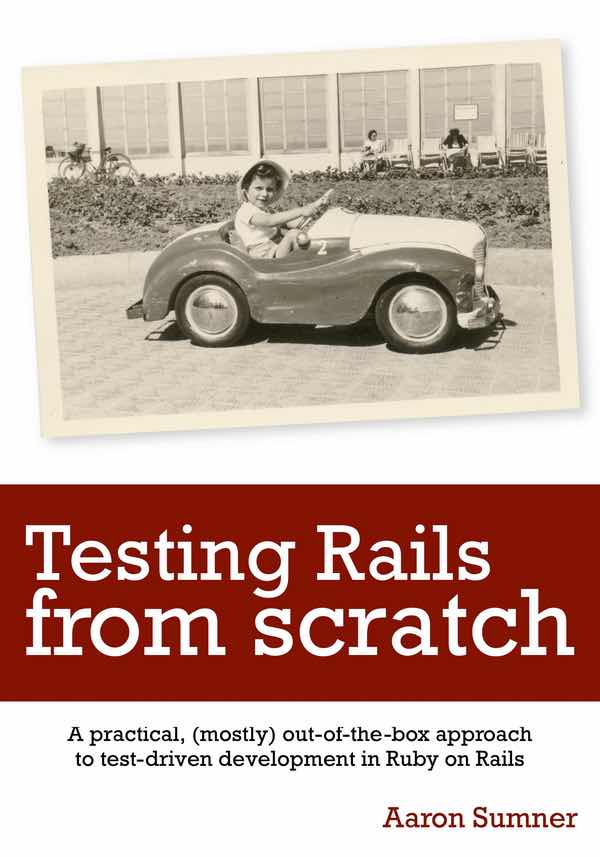
Join me on a thought experiment: How does my time-tested approach to testing Ruby on Rails applications apply to the tools we get from the framework? Whether you're new to Rails testing, or curious about the default testing stack, Testing Rails from Scratch gives you a pragmatic, end-to-end introduction to test-driven development. Covers Rails 8.1 and Ruby 4.0. Early release now available for sale on Leanpub!
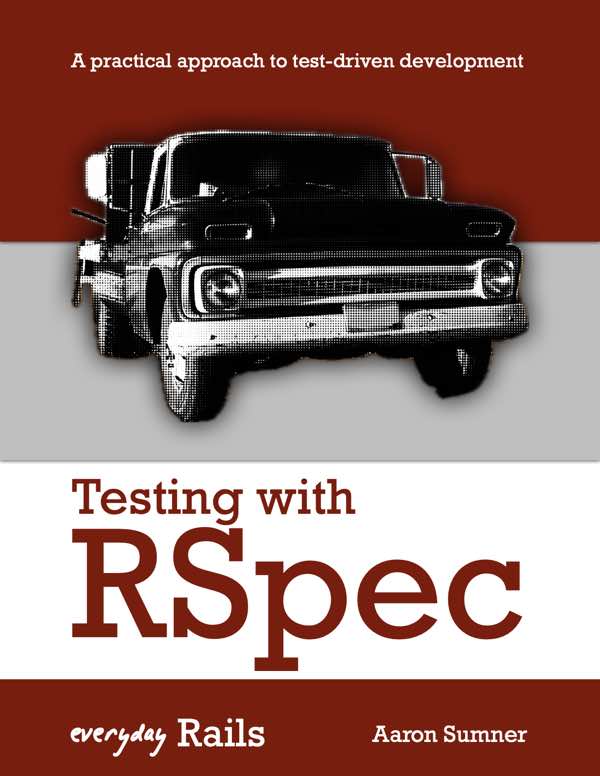
If you liked my series on practical advice for adding reliable tests to your Rails apps, check out the expanded ebook version. Lots of additional, exclusive content and a complete sample Rails application. Updated in 2026 to Rails 8.1 and Ruby 4.0!
Software development news and tips, and other ideas and surprises from Aaron at Left of the Dev. Delivered to your inbox on no particular set schedule.